
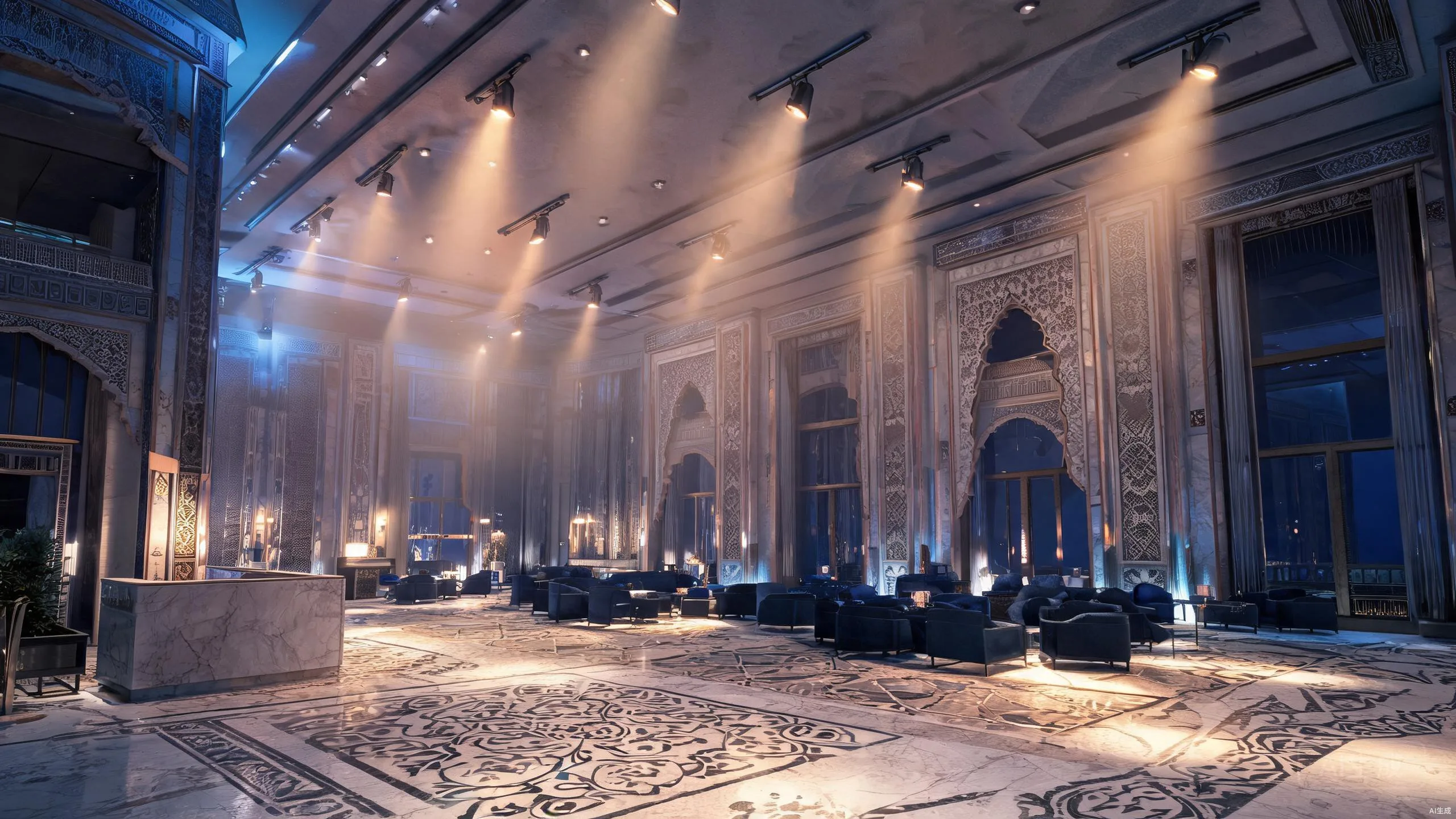
Planning commercial lighting for Saudi Arabia requires understanding SASO and G-Mark certifications, local climate challenges including ambient temperatures exceeding 50 degrees Celsius and frequent sandstorms, Vision 2030 energy efficiency mandates, and scene-specific illumination standards for offices, hotels, retail stores, warehouses, mosques, and outdoor spaces. This comprehensive guide covers everything from regulatory compliance and technical requirements to fixture selection, climate-rated specifications, and cost-effective procurement strategies tailored specifically for the Kingdom of Saudi Arabia and broader Middle East markets.
Why Saudi Arabia Has Unique Lighting Requirements
Saudi Arabia presents one of the most challenging commercial lighting environments in the world. The convergence of extreme desert climate, rapid economic transformation under Vision 2030, and strict regulatory frameworks creates a market where generic lighting solutions often fail prematurely or fall out of compliance. Understanding these unique requirements is the foundation of every successful project.
Vision 2030 and the Energy Efficiency Push
Saudi Vision 2030 is reshaping the Kingdom's built environment at an unprecedented scale. With investments exceeding $3.2 trillion across giga-projects like NEOM, the Red Sea Project, Qiddiya, and Diriyah Gate, the demand for modern, efficient commercial lighting has surged. The Saudi Energy Efficiency Center (SEEC) now enforces strict building energy codes that mandate minimum luminous efficacy and maximum lighting power density. Projects that fail to meet these requirements face delayed approvals and potential penalties.
Extreme Climate: 50 Degrees Celsius Plus Ambient Temperatures
Summer temperatures in Riyadh, Jeddah, and Dammam routinely exceed 50 degrees Celsius. Standard LED fixtures rated for 35 degrees Celsius ambient temperature will experience accelerated lumen depreciation, driver failure, and color shift in these conditions. Dust storms (haboobs) introduce fine particulate matter that infiltrates poorly sealed fixtures, coating heat sinks and reducing thermal dissipation. High UV radiation in the region also degrades plastics and coatings on outdoor luminaires, causing yellowing and brittleness within two to three years.
Cultural and Religious Considerations
Mosque lighting in Saudi Arabia follows specific guidelines that differ from standard commercial spaces. Prayer halls require uniform illumination without glare, with particular attention to mihrab and minbar areas. Ramadan and religious observances extend operating hours, increasing the importance of energy efficiency and maintenance-free operation. Hotel and hospitality lighting must also accommodate gender-segregated spaces and prayer room requirements that are unique to the region.
The Construction Boom
With over $50 billion in active tourism and infrastructure projects, Saudi Arabia is the largest construction market in the Middle East. This scale creates both opportunity and pressure: lighting consultants, contractors, and developers need reliable suppliers who can deliver certified products at volume without delays. Supply chain reliability and documentation accuracy have become as important as product specifications.
Mandatory Certifications for Saudi Lighting Projects
No commercial lighting product can legally enter the Saudi market without proper certification. The regulatory framework centers on the Saudi Standards, Metrology and Quality Organization (SASO) and the SABER electronic platform for conformity assessment. Failure to obtain correct certificates of conformity (CoC) results in shipments being held at customs, project delays, and potential contract penalties.
SASO 2902: Self-Ballasted Lamps and Luminaries
SASO 2902 covers the safety and performance requirements for general LED lamps and luminaires. It specifies electrical safety, thermal management, electromagnetic compatibility, and marking requirements. All commercial LED downlights, panel lights, spotlights, and linear fixtures must comply with this standard.
SASO 2870: Energy Efficiency Requirements (EER)
SASO 2870 establishes minimum energy efficiency standards for lighting products. It mandates minimum luminous efficacy values measured in lumens per watt and imposes maximum standby power consumption. Products that fail to meet the EER tiers cannot receive SASO certification and are barred from sale in the Kingdom.
SASO 2927: Street Lighting
For outdoor and roadway applications, SASO 2927 defines performance parameters including luminous flux maintenance, color rendering, and glare control. Street lights, flood lights, and tunnel luminaires must demonstrate compliance with photometric distribution requirements and environmental durability testing.
SABER Platform and Certificates of Conformity
The SABER platform is the mandatory electronic system for registering products and obtaining Product Certificates of Conformity (PCoC) and Shipment Certificates of Conformity (SCoC). Every lighting product must first obtain a PCoC based on valid test reports from accredited laboratories. Importers then request an SCoC for each shipment. Without these documents, Saudi Customs will not release goods.
G-Mark for Gulf-Wide Acceptance
For suppliers targeting not only Saudi Arabia but also the UAE, Qatar, Kuwait, Bahrain, and Oman, G-Mark certification (GCC Conformity Marking) is essential. Issued by Notified Bodies accredited under the GCC Standardization Organization (GSO), the G-Mark validates compliance with regional technical regulations. A single G-Mark can streamline market access across all six Gulf Cooperation Council states, reducing testing costs and time to market.
Certification Requirements by Product Type
| Product Category | SASO Standard | Energy Efficiency | G-Mark Applicable |
|---|---|---|---|
| LED Downlights | SASO 2902 | SASO 2870 | Yes |
| LED Panel Lights | SASO 2902 | SASO 2870 | Yes |
| LED Street Lights | SASO 2927 | SASO 2870 | Yes |
| LED Flood Lights | SASO 2927 | SASO 2870 | Yes |
| LED High Bay | SASO 2902 | SASO 2870 | Yes |
| Solar Street Lights | SASO 2927 | Exempt | Yes |
Always verify that your supplier provides valid test reports from ISO 17025 accredited laboratories. View Yakeen's certification documentation for reference examples.
Lighting Standards and Technical Requirements
Beyond certifications, commercial lighting in Saudi Arabia must meet specific photometric and performance standards. These standards ensure visual comfort, safety, and operational efficiency across different building types. Whether you are illuminating a high-rise office in Riyadh or a luxury hotel lobby in Jeddah, the technical parameters below define project success.
Recommended Lux Levels by Space Type
Illuminance levels in Saudi Arabia generally follow CIE (International Commission on Illumination) recommendations, with some local adaptations for climate and cultural factors. Maintained illuminance levels account for lumen depreciation over time, which is particularly important given the high dust load in desert environments.
| Space Type | Maintained Illuminance (lux) | Color Temperature (K) | UGR Limit | CRI (Ra) |
|---|---|---|---|---|
| General Office | 300 - 500 | 4000 | < 19 | ≥ 80 |
| Computer Workstation | 500 | 4000 | < 16 | ≥ 80 |
| Conference Room | 300 - 500 | 3000 - 4000 | < 19 | ≥ 80 |
| Hotel Lobby | 200 - 300 | 2700 - 3000 | < 22 | ≥ 90 |
| Hotel Guest Room | 100 - 200 | 2700 - 3000 | < 22 | ≥ 90 |
| Retail Floor | 300 - 500 | 3000 - 4000 | < 19 | ≥ 90 |
| Warehouse Aisle | 150 - 200 | 4000 - 5000 | < 25 | ≥ 80 |
| Mosque Prayer Hall | 200 - 300 | 4000 | < 19 | ≥ 80 |
| Outdoor Parking | 20 - 50 | 4000 - 5000 | < 25 | ≥ 70 |
| Roadway (Local) | 15 - 30 cd/m2 | 4000 | G6 | ≥ 70 |
Color Temperature Guidelines by Application
Color temperature selection in Saudi Arabia follows global best practices with regional nuances. Offices and industrial spaces benefit from 4000K neutral white, which promotes alertness and accurate color judgment. Hospitality spaces favor 2700K to 3000K warm white to create welcoming atmospheres. Mosques traditionally specify 4000K for prayer halls, balancing clarity with reverence. Outdoor applications typically use 4000K to 5000K for optimal visual acuity and reduced light pollution compared to cooler temperatures.
UGR Requirements for Glare Control
The Unified Glare Rating (UGR) measures discomfort glare from luminaires. Saudi commercial projects increasingly specify UGR limits in tender documents. Office spaces with computer screens require UGR less than 19, while general circulation areas may accept UGR less than 22. Poor glare control causes eye strain, reduced productivity, and occupant complaints. Selecting luminaires with proper optical design, including diffusers, louvers, and micro-prismatic lenses, is essential for compliance.
IP Ratings for Different Environments
Ingress Protection (IP) ratings define a luminaire's resistance to dust and moisture. For indoor office and hotel environments, IP20 or IP40 is sufficient. Retail spaces benefit from IP44 in areas prone to cleaning. Warehouses and industrial facilities require IP54 minimum. Outdoor fixtures in Saudi Arabia must achieve at least IP65, with coastal and desert-edge projects benefiting from IP66 or IP67 ratings. The second digit matters too: while rain is infrequent, high-pressure cleaning and occasional flash floods make IPx5 or IPx6 advisable.
Commercial Lighting by Application
Each commercial space type in Saudi Arabia has unique lighting requirements driven by occupant activity, aesthetic goals, and operational constraints. The following sections detail the optimal fixture types, layout strategies, and performance parameters for the most common commercial applications.
Office Lighting
Modern Saudi office spaces demand flexible, glare-free illumination that supports long hours of screen-based work. LED panel lights provide uniform ambient lighting for open-plan areas, while recessed downlights create focused illumination in corridors and meeting rooms. Task lighting at individual workstations allows personal adjustment. The trend in Riyadh and Dammam is toward human-centric lighting systems that adjust color temperature throughout the day, supporting circadian rhythms and employee well-being.
Key considerations for Saudi offices include high ceilings in new commercial towers (often 3.2 to 4 meters), which require luminaires with adequate luminous intensity and beam angle control. Suspended linear systems are increasingly popular for their architectural integration and ease of reconfiguration. All office luminaires must meet SASO 2902 and achieve UGR less than 19 for screen work areas. See our Riyadh office project case study for a real-world implementation.

Hotel Lighting
Saudi Arabia's hospitality sector is expanding at an extraordinary pace, with over 300,000 new hotel rooms planned by 2030 across giga-projects. Hotel lighting must balance functionality, atmosphere, and brand identity. Lobbies require statement chandeliers and layered lighting (ambient, accent, decorative) to create memorable first impressions. Guest rooms need dimmable systems with bedside controls and blackout integration. Restaurants and ballrooms demand flexible scene-setting capabilities.
Color rendering is critical in hospitality: CRI 90 plus ensures that materials, food, and skin tones appear natural and appealing. Warm color temperatures (2700K to 3000K) dominate guest-facing areas, while back-of-house spaces use 4000K for operational efficiency. Emergency lighting and exit signage must comply with Saudi Civil Defense requirements. For boutique properties in AlUla and the Red Sea, fixtures must also withstand coastal salt air and high UV exposure.
Retail Lighting
Retail environments in Saudi Arabia, from luxury malls in Riyadh to souk-style retail districts, depend on lighting to drive sales and create brand experiences. Track lighting and adjustable spotlights provide the flexibility to highlight merchandise as displays change. CRI 90 plus is essential for fashion, jewelry, and cosmetics retail where color accuracy directly impacts purchase decisions. Supermarkets require uniform vertical illuminance on shelving, typically achieved with continuous linear systems.
Energy efficiency is increasingly important for retail operators facing SEEC compliance and rising electricity costs. LED retrofit programs in existing malls can reduce lighting energy consumption by 60 to 70 percent while improving merchandise presentation. Smart controls with occupancy sensing and daylight dimming further optimize energy use in retail environments with large glazing areas. View our Saudi shopping mall case study for a detailed retrofit analysis.
Warehouse Lighting
Warehouses and distribution centers are the backbone of Saudi Arabia's logistics expansion, supporting e-commerce growth and industrial diversification. These spaces require high-bay luminaires mounted at 8 to 15 meters that deliver consistent illuminance across wide areas. UFO-style LED high bays have become the preferred solution due to their compact form factor, excellent thermal management, and high luminous efficacy (often 150 lm/W or greater).
In Saudi warehouses, the combination of high ceilings and extreme heat makes thermal performance the defining selection criteria. Fixtures must carry Ta 50 degrees Celsius ratings minimum, with 55 degrees Celsius preferred for unconditioned spaces. Aisle lighting layouts require asymmetric distribution to maximize vertical illuminace on shelving faces. Motion sensors and daylight harvesting controls are highly recommended, as warehouse operational hours often extend from early morning through night shifts.
Mosque Lighting
Mosque lighting in Saudi Arabia combines functional, spiritual, and architectural objectives. The Grand Mosque in Makkah and the Prophet's Mosque in Madinah set global benchmarks, but neighborhood mosques across the Kingdom follow established standards too. Main prayer halls require uniform horizontal illuminance of 200 to 300 lux at floor level with UGR less than 19 to prevent glare during prostration. The mihrab and minbar areas receive accent lighting at 500 lux to highlight these focal points.
The standard color temperature for mosque prayer halls is 4000K, providing the clarity needed for reading Quran without the clinical feel of cooler temperatures. Decorative lighting for domes, arches, and minarets often uses warm white (2700K to 3000K) for contrast and visual hierarchy. Outdoor courtyard and ablution area lighting requires IP65 minimum with corrosion-resistant finishes. Explore our mosque lighting case study from Qatar for implementation details applicable to Saudi projects.
Outdoor Lighting
Outdoor commercial lighting in Saudi Arabia faces the most severe environmental conditions. Street lights must operate reliably at ambient temperatures up to 55 degrees Celsius while sealed against fine dust. SASO 2927 specifies performance and durability requirements for roadway luminaires, including luminous intensity distribution and maintenance factors. Flood lights for building facades, parking areas, and sports facilities need rugged housings, UV-stable lenses, and surge protection (10kV minimum) for electrical storm resilience.
Solar street lighting is gaining traction in remote project sites and giga-project developments where grid infrastructure is still being constructed. However, solar systems must be carefully specified for Saudi conditions: high temperatures reduce battery life, and dust accumulation on panels requires cleaning protocols. Hybrid solar-grid systems offer a practical compromise, ensuring reliable illumination during dust storms and cloudy periods.
Climate Considerations: What Survives the Saudi Heat
The Saudi climate is the ultimate stress test for commercial lighting. Fixtures that perform adequately in Europe or Southeast Asia often fail prematurely in the Kingdom. Understanding climate-specific requirements prevents costly replacements, maintenance disruptions, and safety hazards.
Temperature Ratings: Ta 50 Degrees Celsius and Beyond
The ambient temperature rating (Ta) indicates the maximum surrounding air temperature at which a luminaire can operate safely. Standard commercial LEDs are often rated for Ta 25 degrees Celsius to 35 degrees Celsius. In Saudi Arabia, this is insufficient. All indoor luminaires for unconditioned spaces should carry Ta 50 degrees Celsius minimum. Outdoor and industrial fixtures should specify Ta 55 degrees Celsius. The driver's electrolytic capacitors are typically the weakest link: look for 105 degrees Celsius rated capacitors with 10,000-hour lifespans or switch to capacitor-less driver designs.
Dust and Sand Protection
Fine desert dust penetrates fixtures through gaskets, cable entries, and mounting interfaces. Once inside, dust coats LED boards and heat sinks, reducing thermal dissipation and accelerating light decay. IP65 is the minimum acceptable rating for outdoor fixtures in Saudi Arabia, with IP66 preferred for exposed locations. For industrial and warehouse interiors, IP54 prevents dust ingress during normal operations. specify fully sealed luminaires with silicone gaskets and no ventilation openings.
UV Resistance for Outdoor Fixtures
Saudi Arabia receives intense solar UV radiation year-round. Polycarbonate lenses and ABS housings without UV stabilizers degrade within two to three years, becoming yellowed, brittle, and prone to cracking. Specify UV-resistant polycarbonate (UV-PC) or tempered glass lenses. Powder-coated aluminum housings with marine-grade epoxy coatings resist both UV and salt corrosion in coastal regions like Jeddah and the Red Sea coast.
Climate Requirements by Fixture Location
| Location | Min IP Rating | Min Ta Rating | UV Resistance | Corrosion Protection |
|---|---|---|---|---|
| Indoor Office (Conditioned) | IP20 | 40°C | Not required | Standard |
| Indoor Warehouse | IP54 | 50°C | Not required | Standard |
| Covered Parking | IP65 | 50°C | Recommended | Standard |
| Outdoor Urban | IP65 | 55°C | Required | Powder coat |
| Outdoor Desert / Remote | IP66 | 55°C | Required | Marine-grade epoxy |
| Coastal / Red Sea | IP66 | 55°C | Required | Salt spray certified |
Energy Efficiency Under Vision 2030
Energy efficiency is no longer optional in Saudi Arabia. Vision 2030 has established ambitious targets for reducing energy intensity across all sectors, and commercial lighting represents one of the most cost-effective retrofit opportunities. The Saudi Energy Efficiency Center (SEEC) periodically updates building energy codes, tightening maximum lighting power density (LPD) limits for new construction and major renovations.
SEEC Mandates and Building Energy Codes
The Saudi Building Code (SBC) and SEEC technical regulations set mandatory LPD limits measured in watts per square meter. Office buildings must typically achieve LPD below 12 W/m2, retail below 15 W/m2, and warehouses below 10 W/m2. Compliance is verified during design review and commissioning. Projects that exceed these limits face rejection of building permits or occupancy certificates.
LED Retrofit ROI Calculations
Retrofitting legacy fluorescent and HID lighting to LED delivers exceptional returns in Saudi Arabia. With electricity tariffs for commercial users ranging from 0.18 to 0.30 SAR per kWh and rising, the economics are compelling. A typical office retrofit reducing lighting power from 15 W/m2 to 8 W/m2 can achieve payback in 18 to 30 months, depending on operating hours. For 24/7 operations like hotels and hospitals, payback periods drop below 12 months.
Beyond direct energy savings, LED retrofits reduce maintenance costs by 70 to 90 percent due to extended lifespans (50,000 to 100,000 hours). In a country where access equipment and specialized labor add significant cost, reducing relamping frequency has substantial operational value. Many Saudi organizations now finance retrofits through ESCO (Energy Service Company) models, where repayment comes from guaranteed savings.
Smart Controls and Daylight Harvesting
Advanced lighting controls multiply the savings from LED upgrades. Occupancy sensors in intermittently used spaces (meeting rooms, restrooms, storage) reduce energy waste by 30 to 50 percent. Daylight harvesting dims artificial lighting when natural daylight is available, particularly effective in Saudi offices with large west-facing glazing. Time-based scheduling aligns lighting with prayer times and shift patterns.
Networked lighting control systems with central dashboards are becoming standard in premium commercial developments. These systems provide energy metering, fault reporting, and predictive maintenance alerts. For giga-projects like NEOM, where sustainability certifications are a priority, smart lighting contributes to LEED and Mostadam green building ratings.
Common Mistakes to Avoid
After supporting dozens of Saudi lighting projects, we have observed recurring errors that cause delays, cost overruns, and performance shortfalls. Avoiding these mistakes saves time, money, and reputation.
Buying Non-SASO Certified Fixtures
The most expensive mistake is importing lighting products without verifying SASO certification. Shipments held at customs accrue demurrage charges of hundreds of dollars per day. Replacement procurement extends project timelines by weeks. Always confirm that your supplier holds valid PCoC documentation and can issue SCoC for each shipment through the SABER platform.
Ignoring Temperature Ratings
Specifying standard Ta 35 degrees Celsius fixtures for Saudi warehouses or outdoor applications guarantees premature failure. Within the first summer, drivers will overheat, capacitors will bulge, and lumen output will drop below acceptable levels. The replacement cycle begins within 18 months, turning a low-cost purchase into a high total cost of ownership. Always verify Ta ratings match the installation environment.
Wrong Color Temperature for the Space
Using 6000K cool white in hotel lobbies creates a sterile, unwelcoming atmosphere that contradicts hospitality objectives. Conversely, 2700K warm white in offices reduces alertness and can increase error rates. Match color temperature to activity: 4000K for task-oriented spaces, 3000K for relaxation and hospitality, 4000K for prayer halls, and 4000K to 5000K for industrial and outdoor applications.
Underspecifying IP Ratings
Choosing IP20 fixtures for covered parking or IP54 for exposed outdoor locations invites dust infiltration and moisture damage. The incremental cost of upgrading from IP54 to IP65 is typically 10 to 15 percent, while premature replacement costs 100 percent plus installation labor. Specify one IP grade higher than the apparent requirement to account for edge cases and maintenance conditions.
Yakeen Lighting: Your Saudi Lighting Partner
Navigating the complexities of Saudi commercial lighting requires more than product catalogs. It demands a partner who understands certification pathways, climate engineering, and the specific requirements of Middle Eastern commercial projects. Yakeen Lighting is a China-based LED manufacturing and solutions partner specializing in SASO and G-Mark certified products for Saudi Arabia, UAE, Qatar, Kuwait, and broader Middle East markets.
Full SASO and G-Mark Certified Product Range
Our product portfolio includes commercial downlights, panel lights, linear systems, UFO high bays, flood lights, street lights, and solar solutions, all engineered for Middle East climate conditions. Every product carries valid SASO certification through the SABER platform and optional G-Mark for Gulf-wide distribution. View our full certification library for documentation.
DIALux Simulation and Lighting Design Support
We provide complimentary DIALux evo lighting simulations for qualified projects, ensuring that proposed layouts meet illuminance, uniformity, and glare requirements before procurement. Our engineering team produces professional calculation reports suitable for Saudi municipal submissions and consultant review. This service eliminates the risk of under-illumination, over-specification, and non-compliance.
Custom OEM and ODM for Saudi Projects
For large-scale developments, we offer custom OEM and ODM services including private labeling, custom color temperatures, specialized beam angles, and branded packaging. Our factory can accommodate project-specific requirements such as Saudi-standard plug configurations, Arabic labeling, and custom RAL colors for architectural integration. Minimum order quantities are flexible, with project-based pricing available for developments exceeding 5,000 units.
Proven Track Record in Saudi Arabia
Yakeen Lighting has supplied certified LED fixtures to shopping malls, office towers, hotel complexes, and mosque projects across the Kingdom. Our Riyadh shopping mall project involved retrofitting 2,400 fixtures with SASO-certified LED downlights and panel lights, reducing lighting energy consumption by 64 percent. Our Dammam office project delivered human-centric lighting with tunable white panel systems. We understand the documentation, logistics, and quality expectations of Saudi contractors and consultants.
Seamless Documentation and Logistics
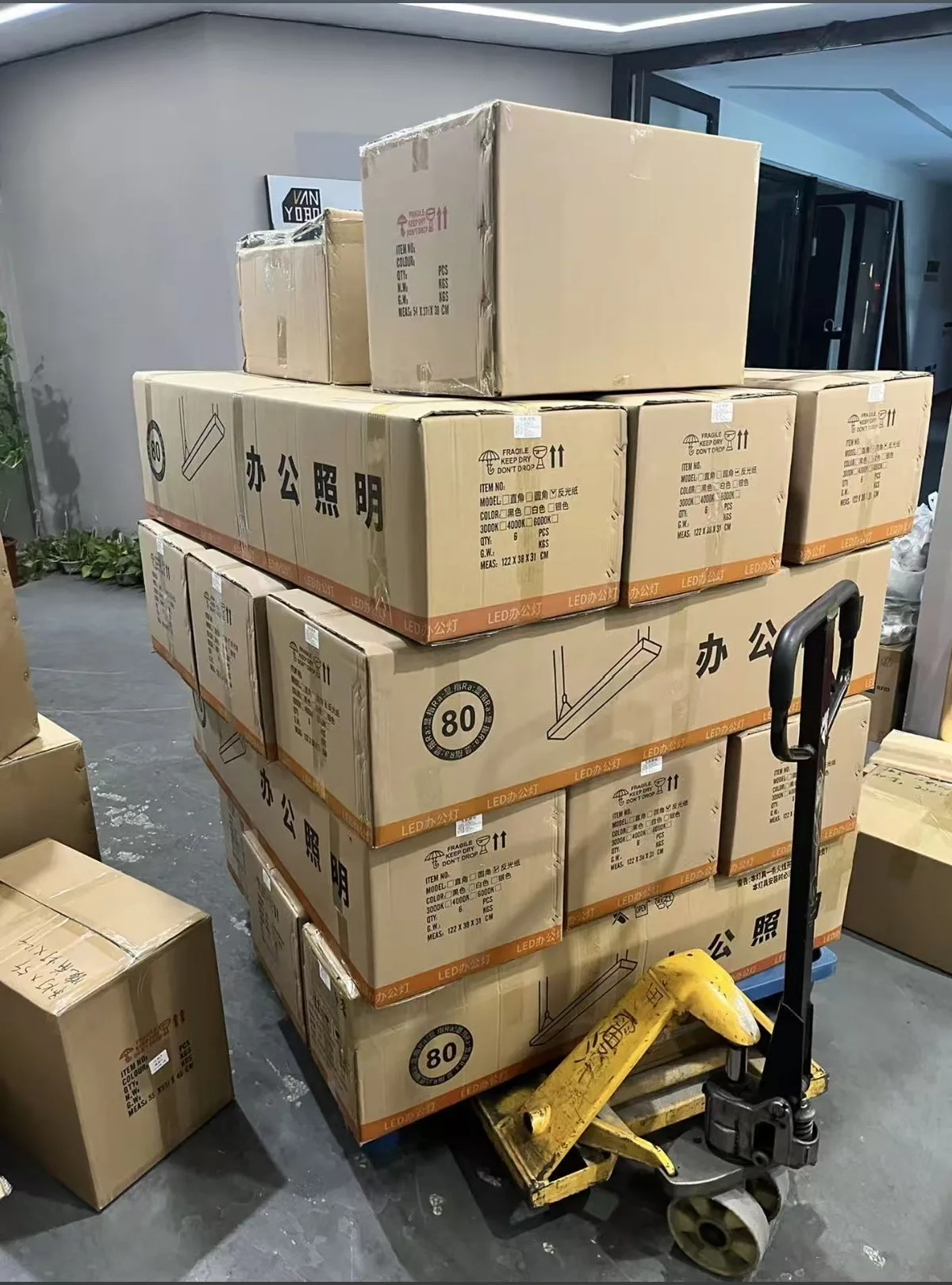
We manage the entire certification and documentation workflow, from test report preparation to SABER platform registration. Our export team handles Incoterms negotiations, customs documentation, and freight forwarding to Jeddah, Dammam, and Riyadh. For clients who need on-site support, we coordinate with local representatives for delivery confirmation and commissioning assistance.
Whether you are a lighting consultant specifying a new giga-project, a contractor bidding on a commercial tower, or a developer planning a hotel portfolio, Yakeen Lighting provides the certified products, technical support, and market knowledge to ensure your project succeeds in Saudi Arabia.
Frequently Asked Questions: Commercial Lighting in Saudi Arabia
What certifications are required for LED lighting in Saudi Arabia?
Yakeen Lighting provides LED fixtures fully certified for the Saudi market, including SASO registration through the SABER platform, SASO 2902 for general lighting, SASO 2870 for energy efficiency, and SASO 2927 for street lighting, plus G-Mark for GCC-wide access. Every shipment ships with verifiable documentation, so Middle East contractors clear Saudi customs without delay or port-side rejection.
What IP rating is needed for outdoor lighting in Saudi Arabia?
Yakeen Lighting provides outdoor LED luminaires rated IP65 as a minimum for Saudi dust and sand protection, with IP66 and IP67 options for coastal Jeddah and harsh desert environments. Our street lights and flood lights also carry IK08 impact resistance, ensuring fixtures survive Middle East sandstorms, thermal cycling, and high-pressure washing without water or dust ingress.
What color temperature is recommended for mosque and commercial lighting in Saudi Arabia?
Yakeen Lighting provides 4000K neutral white LED fixtures for Saudi mosque main prayer halls and commercial offices, where clarity for reading and visual comfort matter most, with 3000K warm white accent options for architectural features and hotel lobbies. Tunable white panel systems are available for human-centric spaces, matching the reverent and welcoming atmosphere required across Middle East projects.
How does Vision 2030 affect commercial lighting requirements?
Yakeen Lighting provides LED solutions engineered to meet Saudi Vision 2030 and SEEC building code mandates, including minimum lighting power density limits of 8-10 W/sqm for offices and 12-15 W/sqm for retail. Our high-efficacy fixtures reaching 130-180 lm/W, paired with smart controls and daylight harvesting, ensure Middle East developments pass energy code certification on the first inspection.
What temperature rating should LED fixtures have for Saudi Arabia?
Yakeen Lighting provides LED fixtures with a minimum ambient temperature rating (Ta) of 50 degrees Celsius for Saudi Arabia, and Ta 55 degrees Celsius options for industrial and outdoor sites. Our drivers use 105 degrees Celsius capacitors and verified ISTMT junction-temperature data, preventing the rapid electrolytic degradation that destroys under-rated luminaires in Gulf summer heat.
What lighting power density limits apply to Saudi commercial buildings?
Yakeen Lighting provides DIALux-verified designs that meet Saudi Building Energy Code LPD limits of 8-10 W/sqm for offices, 12-15 W/sqm for retail, and 5-8 W/sqm for warehouses. Our high-efficacy panels and downlights typically achieve 5 W/sqm in offices, comfortably under the cap, ensuring Middle East projects pass code certification without costly redesigns.
How do I select the right LED products for different Saudi commercial scenarios?
Yakeen Lighting provides a complete product range matched to Saudi applications, including recessed downlights for retail malls, tunable white panels for offices, IP66 high bays for warehouses, IK08 flood lights for facades, and 4000K pendants for mosques. Our team selects the correct beam angle, CRI, and lumen package for each space, ensuring Middle East contractors specify the right fixture the first time.
What is the procurement process for SASO-certified LED lighting in Saudi Arabia?
Yakeen Lighting provides a turnkey procurement process covering DIALux simulation, product selection, SABER registration, test report preparation, Incoterms negotiation, and freight forwarding to Jeddah, Dammam, and Riyadh. For Middle East clients we coordinate delivery confirmation and commissioning support, so Saudi contractors receive certified, ready-to-install luminaires with zero regulatory friction.