
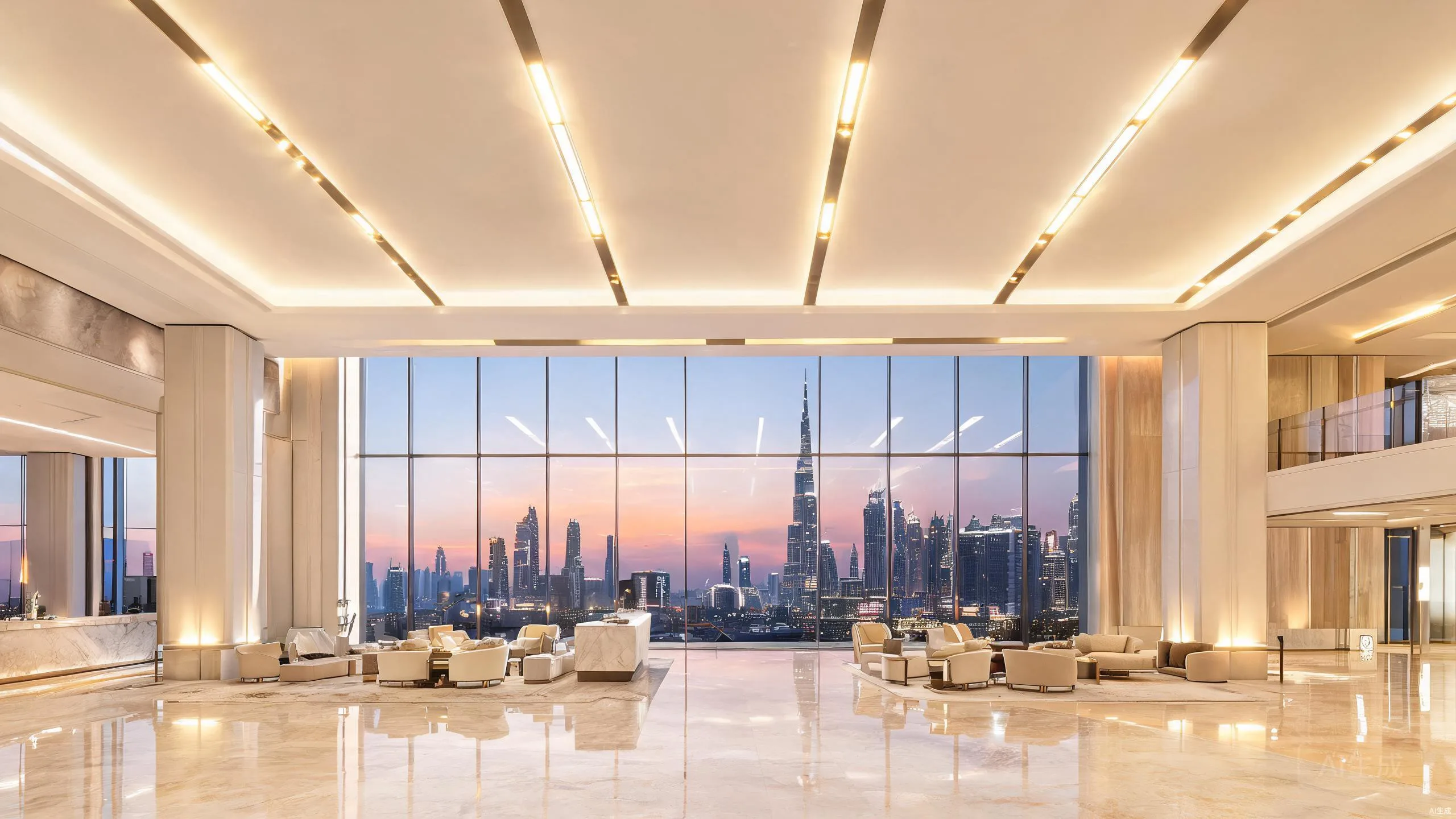
Walk into the Fairmont Ramla Riyadh and you'll notice something before you even reach the front desk—the light. It's warm, it's layered, and it makes everything look expensive. That's not an accident. Luxury hotel lighting is a science and an art, and in Saudi Arabia's booming hospitality market, getting it right can mean the difference between a 4-star and a 5-star guest experience. With Vision 2030 driving $50+ billion in tourism projects, every hotel, resort, and serviced apartment is competing on atmosphere—and lighting is the secret weapon. This guide breaks down how to design hotel lighting that wows guests, supports operations, and saves energy.
Why Hotel Lighting Is Your Most Underrated Marketing Tool
Here's a fact most hotel operators don't realize: guests remember how a place feels more than what it looks like. And lighting is the #1 factor in setting the mood.
Think about it:
- A lobby with flat, even lighting feels like a doctor's office
- The same lobby with layered, warm lighting feels like a luxury retreat
- A guest room with harsh overhead light feels cheap and uncomfortable
- The same room with layered, dimmable lighting feels like a 5-star experience
Good lighting doesn't just illuminate—it sells. It makes guests take photos and post them on Instagram. It makes them book another night. It makes them leave a 5-star review mentioning the "beautiful ambiance."
In a market like Saudi Arabia, where new hotels are opening every month, lighting is one of the easiest ways to differentiate your property. And the ROI is real—properties with well-designed lighting see 10-15% higher ADR (average daily rate) than comparable properties with basic lighting.
Layered Lighting: The Foundation of Luxury Design
Luxury hotel lighting isn't about one type of fixture—it's about layers. You need ambient light for general visibility, task light for specific activities, accent light for drama, and decorative light for personality. Get the layers right, and the space feels effortless. Get them wrong, and it feels flat or chaotic.
Layer 1: Ambient Lighting
The base layer—general illumination that lets people see where they're going.
Best practices:
- Use indirect or semi-indirect sources (cove lighting, recessed downlights with diffusers)
- Keep it relatively dim—ambient light should set the mood, not blind people
- Warm color temperature: 2700K-3000K for most areas
- UGR ≤22 to avoid glare
Layer 2: Task Lighting
Lighting for specific activities—reading, working, applying makeup, eating.
Where it matters:
- Desk lamps in guest rooms
- Vanity lighting in bathrooms
- Table lamps in restaurants
- Reading lights by beds
- Reception desk lighting
Key principle: Task lighting should be brighter than ambient, but not so bright that it creates harsh contrast.
Layer 3: Accent Lighting
The drama layer—lighting that highlights architectural features, art, and focal points.
Uses:
- Wall washing on feature walls
- Spotlights on art and sculpture
- Uplighting on columns and architectural details
- Backlighting for reception desks and bars
Rule of thumb: Accent lighting should be 3-5x brighter than ambient light to create visual interest.
Layer 4: Decorative Lighting
The personality layer—chandeliers, pendants, wall sconces that are beautiful in their own right.
Where to use:
- Lobby chandeliers as statement pieces
- Pendant lights over restaurant tables
- Wall sconces in corridors and guest rooms
- Decorative lamps in lounge areas
Warning: Decorative lighting shouldn't be your primary light source. It's there to look good and add to the ambiance—not to actually illuminate the space.
Guest Room Lighting: Where Guests Form Their Opinion
The guest room is where guests spend the most time, and it's where bad lighting does the most damage. Get this right, and you get 5-star reviews. Get it wrong, and you get complaints about "harsh light" and "can't read in bed."
The Bed Area
This is the most important zone in the room.
What you need:
- Bedside reading lights: Adjustable, dimmable, positioned so light falls on the book, not in the reader's eyes. Wall-mounted swing-arm lamps or headboard-integrated lights work best.
- Ambient glow: Soft, indirect light from cove lighting or table lamps for when you're not reading.
- No overhead light directly over the bed: Nothing kills romance faster than a downlight shining in your face when you're lying down.
- Color temperature: 2700K warm white. It's flattering, relaxing, and makes everything look better.
The Bathroom
Bathroom lighting is tricky—you need enough light for shaving and makeup, but it can't be harsh.
Best practices:
- Vanity lighting: Side-mounted sconces at face level, not overhead lights. Overhead lights create shadows under eyes and on the face.
- Shower light: Waterproof (IP65) recessed downlight with good color rendering (CRI ≥90) so skin looks natural.
- Night light: Low-level floor light or toe-kick lighting for nighttime visits without turning on the main lights.
- Color temperature: 3000K. Warm enough to be flattering, cool enough for accurate makeup application.
The Work Area
Business travelers need a proper workspace.
Requirements:
- Desk lamp: Adjustable, with 3000-4000K color temperature for focus
- Task illuminance: 300-500 lux at desk level
- Glare control: No direct glare from the lamp or from windows
- Convenient controls: Switch at the desk, not across the room
The Entry and Corridor
First impressions matter.
Design tips:
- Soft, welcoming light as you enter the room
- No dark corners—use wall sconces or low-level lighting
- Control panel near the door with "welcome scene" button
- Clear path to the bed and bathroom in the dark
Lobby and Public Areas: Setting the Stage
The lobby is your hotel's calling card. It's where guests form their first impression, and it sets the tone for their entire stay.
The Grand Statement
Every luxury lobby needs a "wow" moment—usually a statement chandelier or lighting installation.
Approach:
- Make it large enough to fill the space proportionally
- Use warm, dimmable light
- Position it as the focal point of the lobby
- Make sure it's visible from the entrance
Pro tip: The chandelier doesn't need to provide all the light. In fact, it shouldn't. It's there to look beautiful. Use recessed downlights and cove lighting for the actual illumination.
Reception Desk
The reception desk is where the first human interaction happens, and the lighting needs to make both guests and staff look good.
Design guide:
- Backlighting: Backlit logo or feature wall behind the desk for brand presence
- Task lighting: Under-cabinet or desk lighting for staff to work
- Face lighting: Soft, even light on staff faces so they look welcoming
- No glare: Don't shine lights directly into guests' eyes as they approach the desk
Seating and Lounge Areas
Lounge areas should feel cozy and inviting.
Lighting strategy:
- Lower ambient light levels (50-100 lux)
- Table lamps and floor lamps for pools of light
- Accent lighting on art and features
- Warm color temperature (2700K)
- Dimmable—brighter during the day, dimmer in the evening
Corridors
Hotel corridors are tricky—they need to be safe and well-lit, but they shouldn't feel like a hospital hallway.
Best practices:
- Low ambient light (50-100 lux)
- Wall sconces every 5-6 meters for rhythm and visual interest
- Ceiling fixtures spaced to avoid "zebra striping"
- Night mode: dim to 20-30% after midnight
- Emergency lighting integrated seamlessly
Restaurant and Bar Lighting: Setting the Mood for Sales
Restaurant lighting is a sales tool. The right lighting makes food look better, makes people stay longer, and makes them order more drinks. Get it wrong, and your restaurant feels like a cafeteria.
The Food Factor
Color rendering is everything in restaurant lighting. If your CRI is 70, that $50 steak looks gray and unappetizing. If your CRI is 95, it looks juicy and delicious.
Specifications:
- CRI ≥90 minimum, CRI 95+ preferred
- Color temperature: 2700K-3000K (warm, flattering)
- R9 value: High red rendering makes food look better
Layered Restaurant Lighting
Just like the lobby, restaurants need layers.
Breakdown:
- Ambient: Low-level general light (50-100 lux) from pendants, wall sconces, or cove lighting
- Task: Table-level lighting (150-200 lux) from pendants or table lamps
- Accent: Spotlights on art, features, bar displays (3-5x ambient)
- Decorative: Pendants, chandeliers, feature lighting
Pro tip: The brightest thing in the restaurant should be the table (and the food on it). That's where you want people looking.
Bar Lighting
The bar is a focal point and a revenue driver.
Design approach:
- Backbar lighting: Backlight bottles for drama and visibility
- Bar face lighting: Under-cabinet or toe-kick lighting for glow
- Pendant lights over the bar: Provide task light for bartenders and ambiance
- Dimmable: Brighter during happy hour, dimmer late night
Daypart Adjustability
The same restaurant needs different lighting at different times of day.
Scenes:
- Breakfast: Brighter (150-200 lux), slightly cooler (3000K) for an energizing start
- Lunch: Medium brightness (100-150 lux), warm white
- Dinner: Dim and intimate (50-100 lux), 2700K
- Late night: Very dim (30-50 lux), with accent lighting on bar and features
Smart controls make this automatic—no staff member has to remember to dim the lights at 7pm.
Exterior and Facade Lighting: Curb Appeal That Sells Rooms
The exterior of your hotel is visible 24/7, and it's often the first thing potential guests see. If it looks dark and cheap at night, they'll book somewhere else. If it looks stunning, they'll pull in.
Facade Lighting Strategy
The goal is to make the building look beautiful and inviting—not like a sports stadium.
Approach:
- Warm white light: 2700K-3000K for elegance and warmth
- Grazing light: For textured surfaces (stone, brick) to show off texture
- Wall washing: For large, flat surfaces
- Accent lighting: For architectural features (columns, arches, entrances)
- Subtle, not flashy: Contrast and shadow create interest
Common mistake: Over-lighting. You don't need every square meter at full brightness. The human eye is drawn to contrast—use it.
Landscape Lighting
Don't forget the grounds.
Elements to light:
- Entry driveways and walkways (safety + ambiance)
- Trees and landscaping (depth and interest)
- Water features (drama and movement)
- Signage (visibility and branding)
Tip: Use warm white for everything. Color-changing landscape lights feel tacky in a luxury context.
Signage Lighting
Your hotel sign needs to be visible and readable, but it shouldn't be the brightest thing on the building.
Best practices:
- Backlit or halo-lit signs look more luxury than front-lit
- Match the color temperature to the rest of the exterior
- Dimmable—full brightness at dusk, dimmer late at night
- No flickering or buzzing (cheap LED drivers cause this)
Smart Lighting Control: The Luxury Standard
No luxury hotel built today should be without smart lighting controls. It's not a "nice to have" anymore—it's expected.
Guest Room Controls
Guests expect to be able to control the lighting easily.
Features to include:
- Welcome scene: One button that turns on key lights when you enter
- Bedside master control: Turn everything off without getting out of bed
- Dimmers everywhere: Let guests set their preferred brightness
- Night light mode: Soft, low-level lighting for nighttime
- Integration with HVAC and curtains: One button for "sleep" or "wake up"
Pro tip: The #1 guest complaint about hotel lighting is "I couldn't figure out the switches." Keep it simple. Use clear labels, intuitive layouts, and physical buttons (not just touchscreens).
Energy Management
Smart controls aren't just for guest experience—they save serious money.
Energy-saving features:
- Occupancy sensors: Turn lights off when rooms are empty
- Daylight harvesting: Dim lights when natural light is sufficient
- Scheduling: Automatic day/night scenes in public areas
- Centralized monitoring: Track energy use per floor or zone
Savings potential: 30-50% lighting energy reduction compared to basic switching. For a 200-room hotel, that's $100,000 per year.
Integration with Other Systems
Modern hotel lighting doesn't exist in a vacuum.
Integrations:
- PMS (Property Management System): Turn on "welcome scene" when guest checks in, set to energy-saver mode when checked out
- BMS (Building Management System): Coordinate lighting with HVAC for maximum efficiency
- AV systems: One-touch "movie mode" that dims lights and turns on the TV
- Security systems: Flash lights or turn on full brightness in emergency
Saudi-Specific Considerations
Saudi Arabia's hotel market has unique requirements you won't find elsewhere.
Prayer Room Lighting
Every hotel needs a prayer room, and its lighting has specific requirements.
Design guide:
- 4000K neutral white (standard for mosque/prayer spaces)
- Glare-free (UGR ≤19) since worshippers look upward during prayer
- Qibla direction lighting: Subtle indicator, not a bright spotlight
- Ablution area: IP65 fixtures, anti-corrosion materials
- Separate controls for men's and women's areas
Ramadan Lighting
During Ramadan, hotel lighting needs change dramatically.
Adjustments:
- Iftar and suhoor: Restaurant lighting needs to accommodate large crowds at unusual hours
- Lobby and public areas: Warmer, more festive lighting
- Exterior: Decorative lighting for the holiday
- Scheduling: Lighting schedules shift to match Ramadan hours
Smart controls make this easy—you can have a "Ramadan mode" that changes all schedules with one click.
Climate and Durability
Saudi Arabia's climate is tough on lighting fixtures.
Requirements:
- High-temperature rated: Drivers rated for 55°C+ ambient
- Dust resistance: IP65 minimum for exterior, IP54+ for interior
- UV resistance: Outdoor fixtures won't yellow or degrade
- Corrosion resistance: Especially for coastal hotels (Jeddah, Red Sea projects)
| Area | Lux Level | Color Temp | CRI |
|---|---|---|---|
| Lobby | 150-300 | 2700K-3000K | 90+ |
| Guest Room | 50-300 (varies) | 2700K | 90+ |
| Bathroom | 300-500 | 3000K | 90+ |
| Restaurant | 50-200 | 2700K-3000K | 95+ |
| Corridors | 50-100 | 2700K | 80+ |
| Prayer Room | 300-500 | 4000K | 90+ |
Case Study: Fairmont Ramla Riyadh
Let's look at a real example—the Fairmont Ramla Riyadh, which opened in 2024 with a state-of-the-art connected lighting system.
What they did:
- Dynalite lighting control system integrated with hotel PMS
- DALI actuators for precise dimming control
- PIR sensors in guest rooms that detect occupancy
- Integration with door locks: "Welcome scene" activates when guest enters
- HVAC integration: Lights off + HVAC to "green mode" when room is unoccupied
- Custom scenes for different times of day and events
The results:
- 35% reduction in lighting energy use
- Improved guest satisfaction (4.8/5 for room comfort)
- Reduced maintenance—longer fixture life from proper dimming
- Faster housekeeping—room status visible from central system
That's what modern hotel lighting looks like. It's not just pretty—it's smart, efficient, and it actually improves the guest experience.
How Yakeen Lighting Approaches Hospitality Projects
At Yakeen Lighting, we've worked on hotel and hospitality projects across Saudi Arabia and the UAE, from boutique resorts to 5-star business hotels. We understand that hotel lighting isn't just about putting fixtures in the ceiling—it's about creating experiences that make guests want to come back.
Our approach:
- Concept first: We start with the mood and experience you want to create, then work backward to fixtures
- Full layered design: Ambient, task, accent, decorative—all four layers, properly balanced
- Saudi-grade quality: All fixtures rated for the climate—high temp, dust, UV resistance
- Smart control integration: We design control systems that are powerful but simple to use
- SASO certified: Full compliance for Saudi projects, no customs issues
Our DF series lens technology is particularly valuable for hospitality projects. The precision optics let us create exactly the light distribution we want—soft pools of light over restaurant tables, even wall washing on feature surfaces, glare-free downlights for guest rooms. No more "one beam angle fits all" compromises.
We also offer custom hospitality lighting solutions for projects that need something special—custom chandeliers, bespoke decorative fixtures, special finishes, you name it. We've designed everything from lobby statement pieces to custom guest room lamps, all built to last and look beautiful.
If you're working on a hotel project in Saudi Arabia or anywhere in the Gulf, don't leave lighting as an afterthought. It's one of the highest-ROI investments you can make. Reach out to us at [email protected] or WhatsApp +8618103434722, and let's talk about how to make your hotel shine.