
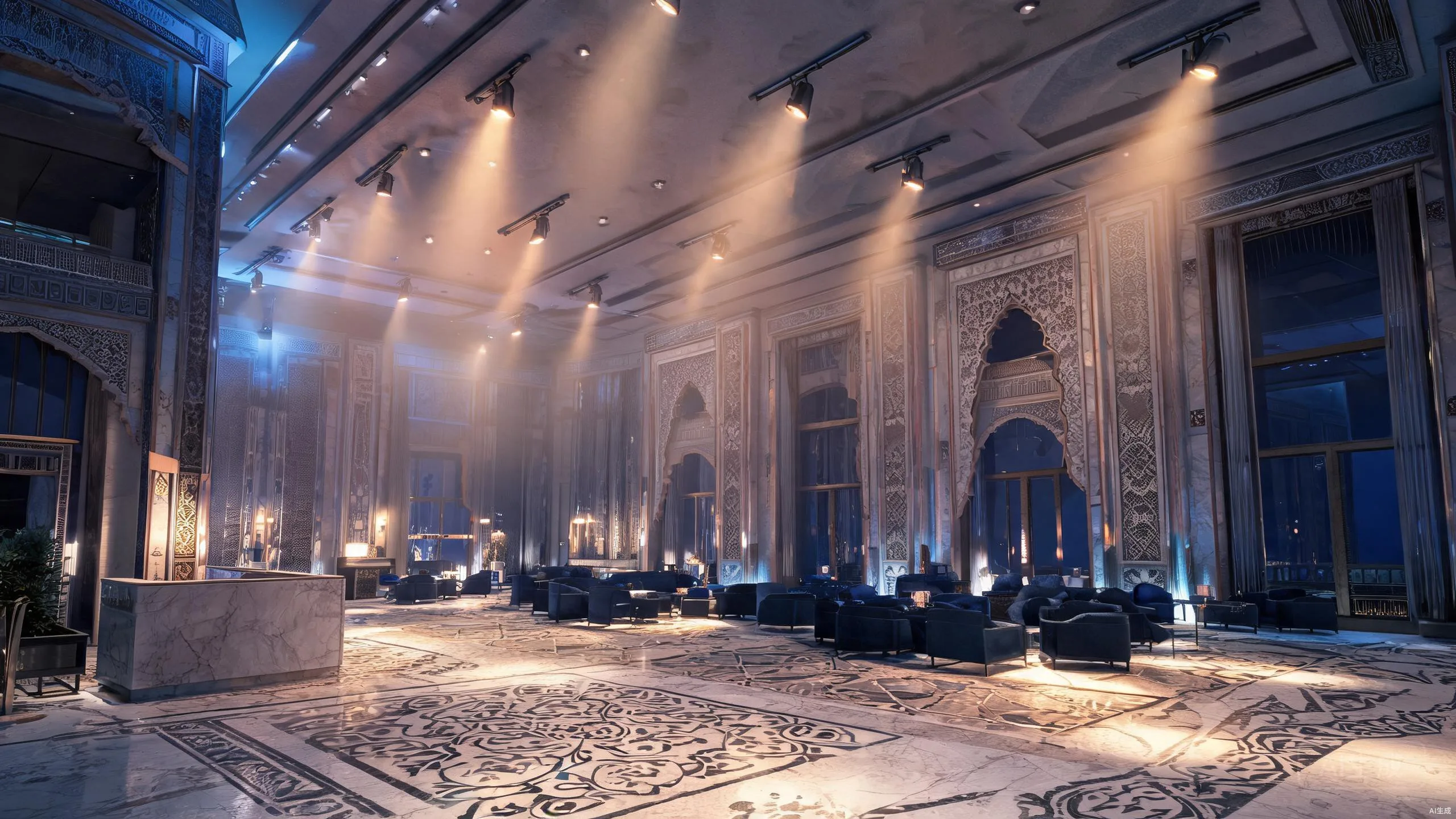
When the Prophet's Mosque in Madinah replaced 133,000+ lighting units in 2025, they didn't just swap old bulbs for new ones. They completely reimagined how light interacts with sacred space—standardizing everything to 4000K neutral white, adding smart controls, and even engineering the light spectrum to deter locusts. That's the level of thought that goes into modern mosque lighting in Saudi Arabia. It's not about brightness—it's about reverence, functionality, and respect for the architecture. This guide walks you through what works, what doesn't, and how to design mosque lighting that honors tradition while embracing modern LED technology.
Why Mosque Lighting Is Different From Any Other Project
Let's start with the obvious: mosques aren't offices or retail spaces. The lighting has a job to do that goes far beyond illumination. It sets the spiritual tone, guides worshippers through prayer, and highlights the architectural beauty of the space without distracting from it.
Get it wrong, and you've got a mosque that feels like a supermarket—harsh, cold, and completely out of place. Get it right, and the light disappears, letting the architecture and the atmosphere take center stage.
Key challenges unique to mosque lighting:
- High ceilings and vast spaces: Many mosques have 10-20 meter ceilings, requiring powerful, well-controlled fixtures
- Mixed use patterns: Prayer times create peak usage, while other times the space is nearly empty
- Glare sensitivity: Worshippers are often looking upward during prayer, making glare a major issue
- Architectural integration: Lighting must complement, not compete with, Islamic architectural elements
- Durability requirements: With 5 daily prayers and thousands of worshippers, fixtures need to last
The 4000K Standard: Why Neutral White Won
Walk into any major mosque in Saudi Arabia built or renovated in the last five years, and you'll find one thing in common: 4000K color temperature. This isn't a coincidence—it's the result of years of testing and debate.
Here's why 4000K became the standard:
| Color Temperature | Pros | Cons |
|---|---|---|
| Warm White (2700K-3000K) | Feels cozy, traditional | Too yellow for large spaces, makes white marble look dirty, insufficient for reading Quran |
| Cool White (5000K-6500K) | Bright, energetic | Feels cold and clinical, creates harsh shadows, disrupts the peaceful atmosphere |
| Neutral White (4000K) | Clean, natural, shows true colors, reduces eye strain during reading, feels calm but alert | None significant—this is the sweet spot |
The Two Holy Mosques Authority standardized on 4000K for both the Grand Mosque in Makkah and the Prophet's Mosque in Madinah, and that decision rippled across the entire country. If you're designing a mosque in Saudi Arabia today and you're not using 4000K, you're already behind.
Interior Lighting Design: Prayer Hall Best Practices
The prayer hall is the heart of any mosque, and its lighting needs to work on multiple levels. Here's how to approach it:
Ambient Lighting: The Foundation
You need uniform, glare-free ambient light across the entire prayer hall. Target 200-300 lux at floor level—enough to see clearly, but not so bright that it feels like an operating room.
Recommended fixtures:
- Recessed downlights with deep baffles for glare control
- Linear cove lighting along ceiling perimeters
- Column-mounted fixtures for arcade areas
Critical: UGR (Unified Glare Rating) must be ≤19. Worshippers are prostrating with their faces near the floor, looking upward at the ceiling. If your fixtures are glaring, you're ruining the prayer experience.
Accent Lighting: Highlighting Architecture
Islamic architecture is full of beautiful details—arches, columns, calligraphy, geometric patterns. Accent lighting brings these to life.
Where to use accent lighting:
- Mihrab and minbar: These are focal points and deserve special attention
- Column capitals and bases: Use wall washers to highlight architectural detail
- Calligraphy and decorative elements: Narrow-beam spotlights to draw the eye
- Dome interiors: Indirect lighting to create a floating, ethereal effect
Pro tip: For domes, use indirect lighting from the base rather than fixtures mounted on the dome itself. It creates a more uniform glow and makes maintenance much easier.
Functional Lighting: The Practical Stuff
You can't forget the practical side of mosque lighting:
- Quran reading areas: Need higher illuminance (300-500 lux) with excellent color rendering (CRI ≥90)
- Ablution areas: Waterproof fixtures (IP65 minimum) with anti-corrosion coatings
- Corridors and entryways: Lower illuminance (100-150 lux) to create transition zones
- Emergency lighting: Mandatory, with battery backup for 90+ minutes
Exterior and Minaret Lighting: Making an Impression
The exterior of a mosque is its calling card—visible from blocks away, especially at night. Done right, it becomes a landmark. Done wrong, it looks like a Las Vegas casino.
Minaret Lighting
Minarets are vertical statements, and their lighting should emphasize their height and elegance.
Best practices:
- Use warm white (3000K) for exterior—slightly warmer than interior to create a welcoming glow
- Uplight from the base to emphasize height
- Highlight architectural details (balconies, galleries, crescents) with accent lighting
- Avoid color-changing lights—they're considered inappropriate for religious buildings
Fixture selection:
- Narrow-beam flood lights (10°-15°) for vertical uplighting
- Linear LED strips for cove lighting on balconies
- IP66 minimum rating (sand, dust, and humidity are brutal in Saudi Arabia)
Facade Lighting
The main building facade needs to be visible and beautiful, but not over-the-top.
Approach:
- Wall washing for large, flat surfaces
- Grazing light for textured stone or tile
- Accent lighting for arches, entrances, and decorative elements
- Subtle, not flashy—let the architecture speak for itself
Common mistake: Over-lighting. You don't need every square meter lit up like a football stadium. Contrast is what makes facade lighting interesting.
Courtyard Lighting
Mosque courtyards are gathering spaces, circulation areas, and sometimes overflow prayer areas.
Requirements:
- Uniform ground illumination (50-100 lux)
- Glare-free fixtures (worshippers may be praying here too)
- Pathway lighting for safe circulation
- Decorative elements (fountains, gardens) deserve accent lighting
Smart move: Use bollard lights or in-ground uplights instead of tall poles. They keep sightlines clear and don't interfere with the architecture.
Smart Lighting Control: The Modern Mosque
Modern mosques aren't stuck in the past when it comes to technology. Smart lighting controls are becoming standard, and for good reason.
Why Smart Controls Make Sense
Mosques have very predictable usage patterns—five daily prayers, plus special prayers on Fridays and during Ramadan. Smart controls can automatically adjust lighting based on the schedule.
Benefits:
- Energy savings: Dim lights during non-peak hours, brighten for prayer times
- Convenience: No one has to manually flip switches before each prayer
- Atmosphere control: Different scenes for different times of day
- Maintenance monitoring: Get alerts when fixtures fail
Typical Lighting Scenes
A well-programmed smart mosque lighting system might have these scenes:
| Scene | Time | Ambient Level | Accent Level | Purpose |
|---|---|---|---|---|
| Fajr | Dawn prayer | 70% | 50% | Gentle wake-up atmosphere |
| Daytime | Between prayers | 40% | 30% | Energy savings, basic visibility |
| Dhuhr/Asr | Midday prayers | 100% | 70% | Full illumination for prayer |
| Maghrib/Isha | Evening prayers | 100% | 100% | Full brightness + exterior on |
| Taraweeh | Ramadan evenings | 100% | 80% | Extended prayer sessions |
| Night | After Isha | 20% | 10% | Security lighting only |
Special Considerations for the Saudi Climate
Saudi Arabia's climate is brutal on lighting fixtures. If you're used to specifying fixtures for temperate climates, you need to adjust your approach.
Heat: The #1 Enemy
Summer temperatures in Riyadh regularly hit 45°C+, and fixture surface temperatures can go much higher. Heat kills LED drivers and degrades light output faster than anything else.
What to look for:
- High-temperature rated drivers (85°C+ ambient rating)
- Excellent thermal management—thick aluminum heat sinks, not plastic
- Derating: If a fixture is rated for 100W at 25°C, it might only do 70W at 50°C
- L70 lifespan rated at actual operating temperature, not 25°C
Sand and Dust
Sandstorms are common, and fine dust gets everywhere.
Requirements:
- IP66 minimum for all exterior fixtures
- IP65 for interior fixtures in dusty areas (entryways, courtyards)
- Sealed driver compartments
- Avoid fixtures with vents or openings
UV and Corrosion
Strong UV radiation and high humidity (especially in coastal areas like Jeddah) cause corrosion and material degradation.
Material choices:
- Anodized aluminum or powder-coated steel (not bare steel)
- UV-stabilized polycarbonate lenses (not acrylic, which yellows)
- Stainless steel hardware
- Corrosion-resistant coatings for coastal projects
Common Mosque Lighting Mistakes to Avoid
After working on dozens of mosque projects across Saudi Arabia, we've seen the same mistakes repeated. Here's what not to do:
1. Using the Wrong Color Temperature
We already covered this, but it bears repeating: 4000K for interior, 3000K for exterior. Anything else looks wrong.
2. Too Much Glare
If worshippers are complaining about eye strain or headaches, your fixtures are glaring. Use deep-recessed downlights, indirect lighting, and UGR ≤19 fixtures.
3. Cheap Fixtures That Fail Fast
Mosques are high-usage spaces, and cheap fixtures fail fast. Replacing a downlight in a 15-meter ceiling costs more in labor than the fixture itself. Spend a little more upfront for quality.
4. Ignoring Maintenance Access
All fixtures fail eventually. Can you reach them? Think about access panels, lift points, and serviceability before you install fixtures in hard-to-reach places.
5. Over-Lighting the Exterior
Less is more. You don't need every surface lit at full brightness. Contrast and shadow create visual interest.
6. Forgetting About Qibla Direction
Lighting shouldn't distract from the qibla. Avoid placing bright fixtures on the qibla wall that would draw attention away from the mihrab.
Real-World Example: The Prophet's Mosque Renovation
Let's look at the big one—the Prophet's Mosque in Madinah. When they renovated the lighting system in 2025, here's what they did:
- 138,650 total lighting units replaced with LED technology
- 30+ different lighting types tailored to specific areas
- 4000K standard color temperature across the entire complex
- 8,219 column-mounted units for arcade areas
- 10,546 decorative units engraved with the name of Allah
- 297 chandeliers for major halls
- Smart BMS integration for centralized control
- Locust-deterring light spectrum engineered specifically for the region
The result? A system that uses 60% less energy than the old one, lasts 5x longer, and actually enhances the spiritual atmosphere of the mosque. That's what good mosque lighting design looks like.
How Yakeen Lighting Approaches Mosque Projects
At Yakeen Lighting, we've worked on mosque projects from small neighborhood masjids to large Friday mosques across Saudi Arabia, the UAE, and Qatar. We understand that mosque lighting isn't just another commercial project—it requires sensitivity, respect, and technical expertise.
Our approach:
- Site survey first: We measure the space, assess the architecture, and understand the usage patterns before recommending anything
- 4000K interior / 3000K exterior standard: Unless you specifically want something different, this is our baseline
- Glare-free design: All our mosque fixtures are UGR ≤19, with deep baffles and diffusers
- Saudi-grade durability: IP66 exterior, high-temperature drivers, corrosion-resistant materials
- Smart lighting integration: We can design a complete control system with prayer time scheduling
Our DF series lens technology is particularly well-suited for mosque projects. The precision optics let us control light exactly where it needs to go—no wasted light, no glare, perfect uniformity. Whether you're lighting a 20-meter dome or a delicate mihrab, we can dial in the exact beam angle and distribution you need.
We also offer custom mosque lighting solutions for projects that require something special—decorative fixtures, custom sizes, special color temperatures, you name it. We've designed everything from custom chandeliers to minaret lighting systems, all built to last in the Saudi climate.
If you're working on a mosque lighting project and want to make sure you get it right, reach out to us at [email protected] or WhatsApp +8618103434722. We can provide lighting calculations, product samples, and references from similar projects we've completed. Because when it comes to mosque lighting, getting it right matters.