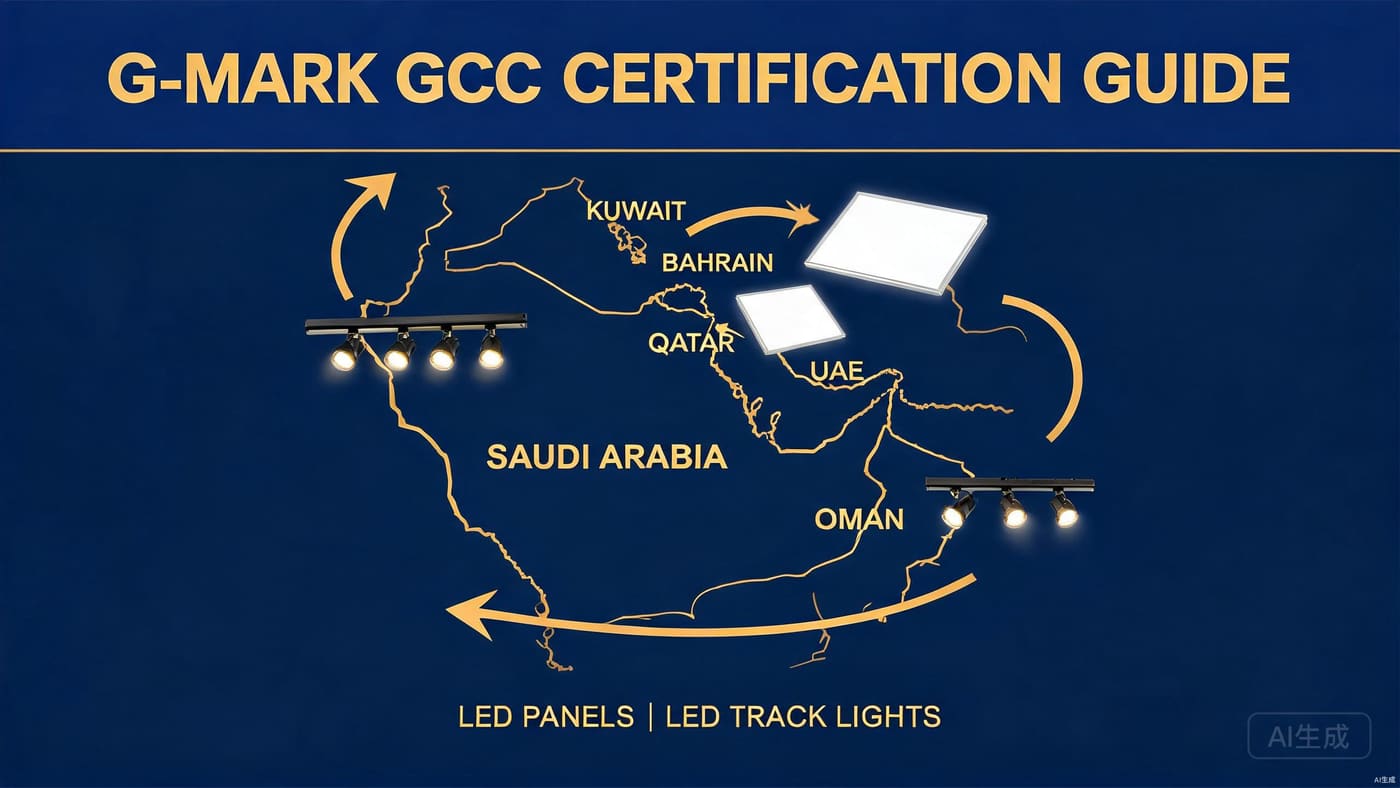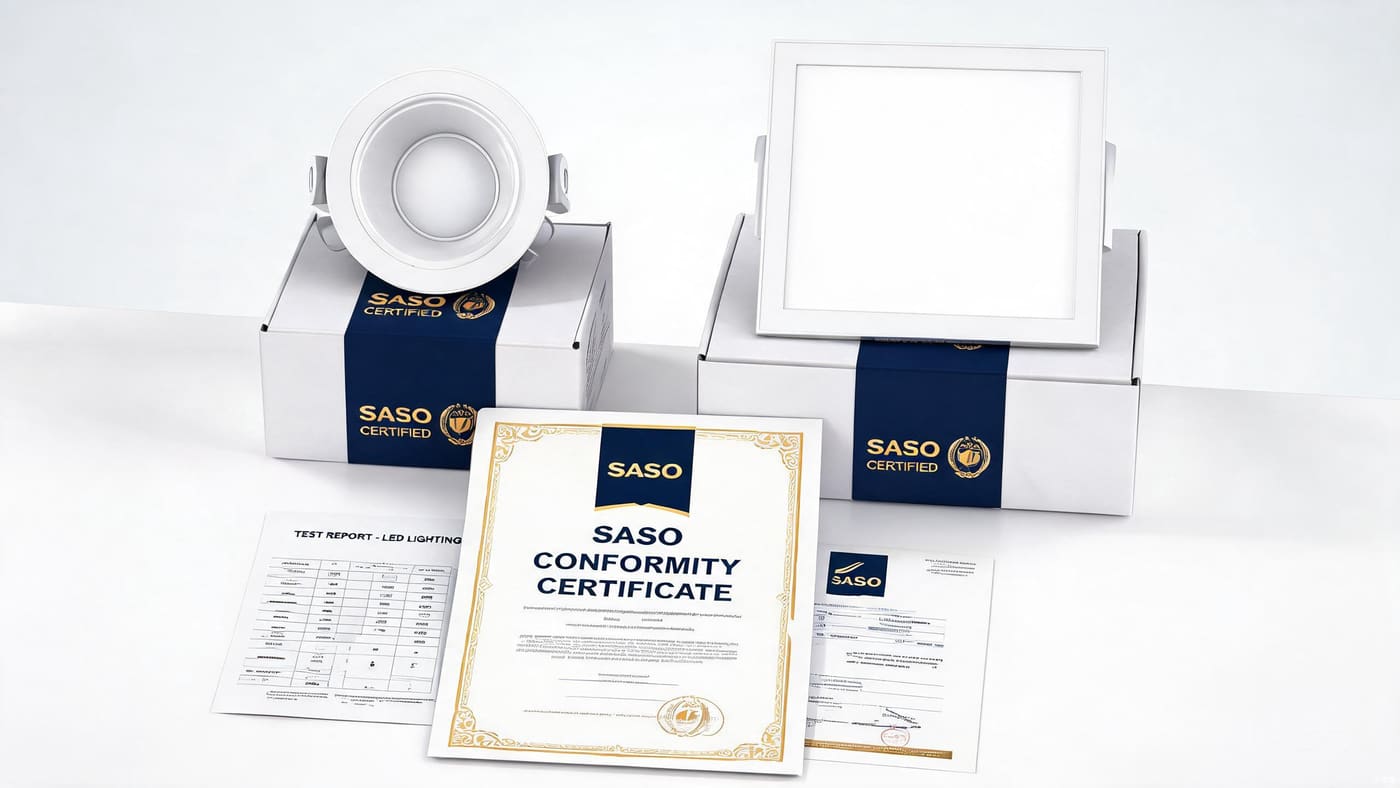
SASO Certification for LED Lighting: Complete Guide for Saudi Arabia Importers
SASO certification is mandatory for all LED lighting products imported into Saudi Arabia. Without it, Saudi Customs will reject your shipment at the port. This guide explains the SASO certification process, SABER platform registration, required documents, and how to ensure smooth customs clearance for your lighting products.
What is SASO Certification?
SASO stands for the Saudi Standards, Metrology and Quality Organization. It is the government body responsible for developing and enforcing product standards in Saudi Arabia. For LED lighting products, SASO certification confirms that your products meet the Saudi Technical Regulation for Lighting Products (aligned with IEC 60598 and IEC 62560 standards).
SASO certification involves two key steps:
- Product testing at a SASO-accredited laboratory (IECEE CBTL)
- SABER platform registration to obtain the Certificate of Conformity (CoC)
The SABER Platform: Saudi Arabia’s Online Certification System
SABER (Saudi Product Safety Programme) is the online platform where importers register products and obtain conformity certificates. Launched in 2019, SABER replaced the old SASO CoC paper-based system.
Steps to Register on SABER:
- Create an account on saber.sa
- Submit product technical documentation
- Upload test reports from accredited labs
- Pay certification fees
- Receive your Certificate of Conformity (CoC)
The CoC is linked to your shipment’s commercial invoice and is verified by Saudi Customs at the port of entry.
Required Documents for SASO Certification
To obtain SASO certification for LED lighting, you need:
- Test reports from an IECEE CBTL-accredited laboratory
- Product datasheets with full technical specifications
- Product photos (front, back, label)
- Manufacturer’s declaration of conformity
- CB Test Certificate (if available, accelerates the process)
- SASO Energy Efficiency registration (for regulated lamp categories)
Key Standards for LED Lighting
SASO references the following international standards for LED lighting products:
| Standard | Scope |
|---|---|
| IEC 60598-1 | General requirements for luminaires |
| IEC 60598-2-x | Particular requirements by luminaire type |
| IEC 62560 | Self-ballasted LED lamps for general lighting |
| IEC 62722-2-1 | LED luminaire performance |
| IEC 62471 | Photobiological safety |
Costs and Timeline
- Product testing: $500-2,000 per product (varies by complexity)
- SABER registration fee: SAR 500-1,500 per product
- Total timeline: 3-6 weeks from test report submission to CoC issuance
- CoC validity: 1 year (renewable)
Common Reasons for SASO Rejection
- Incomplete test reports — missing test parameters or non-accredited lab
- Incorrect product classification — wrong HS code or product category
- Missing energy efficiency label — required for regulated lamp types
- Label non-compliance — Arabic language label requirement not met
How Yakeen Lighting Handles SASO Certification
Yakeen Lighting provides full SASO certification support for all LED lighting products:
- Pre-compliant product design (IEC 60598/62560 aligned)
- CB Test Certificates from accredited labs
- Complete SABER registration assistance
- Arabic-compliant product labeling
- Customs clearance documentation package
Contact us for SASO-certified LED lighting with full documentation support.
References
- SASO Official Website: saso.gov.sa
- SABER Platform: saber.sa
- IEC 60598-1: Luminaires — General requirements and tests
- IEC 62560: Self-ballasted LED lamps for general lighting services