The GCC commercial lighting market is undergoing a shift from traditional on/off switching to intelligent, networked lighting systems. Driven by Saudi Vision 2030 and UAE Net Zero 2050 initiatives, building developers and facility managers are specifying smart lighting that reduces energy consumption by 30-60% while improving occupant comfort.
This article examines 6 smart lighting trends shaping GCC commercial buildings in 2026, with practical implications for specifiers, contractors, and building owners.
1. Human-Centric Lighting (HCL)
Human-Centric Lighting (HCL) adjusts color temperature and intensity throughout the day to match the human circadian rhythm. Research from the Lighting Research Center shows that HCL can improve worker productivity by 3-5% and reduce sleep disorders by 23%.
How HCL Works
| Time of Day | Color Temperature | Light Intensity | Biological Effect |
|---|---|---|---|
| 6:00-9:00 | 4000K-5000K | High (80-100%) | Suppresses melatonin, promotes alertness |
| 9:00-14:00 | 5000K-6000K | Maximum (100%) | Peak concentration period |
| 14:00-17:00 | 4000K-5000K | High (70-90%) | Sustained focus, gradual warm-down |
| 17:00-20:00 | 3000K-3500K | Medium (50-70%) | Transition to relaxation |
| 20:00+ | 2700K-3000K | Low (30-50%) | Promotes melatonin secretion |
GCC Application
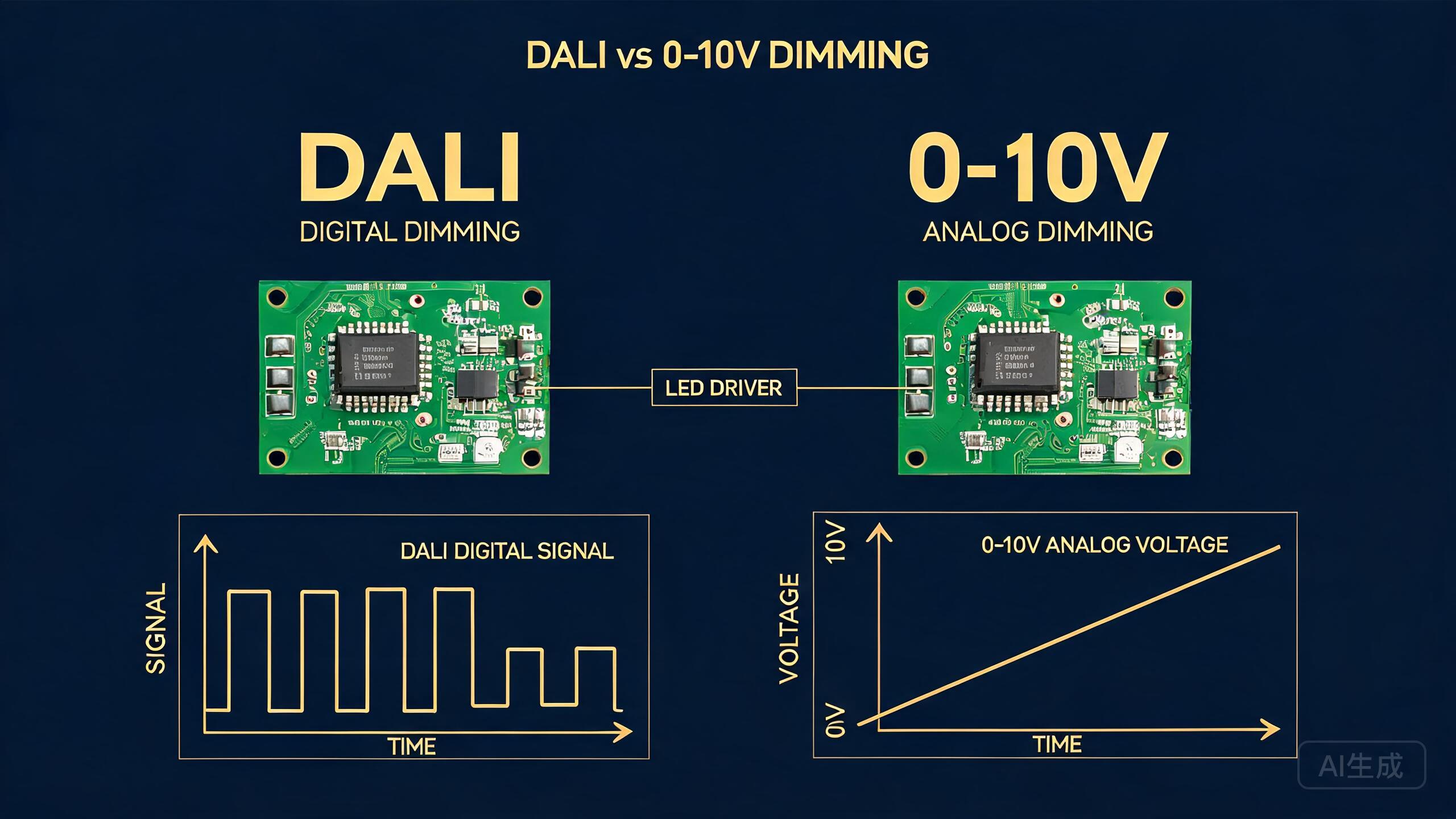
HCL is particularly relevant for Saudi Arabia and UAE offices where workers spend 10-12 hours indoors with limited natural light. Tunable white LED fixtures (2700K-6500K) with DALI or 0-10V dimming can implement circadian lighting programs via a central controller.
Yakeen Lighting offers tunable white options on its LED panel, linear pendant, and downlight product lines, with CCT adjustable from 2700K to 6500K and CRI>90.
2. Wireless Lighting Control
Wireless protocols are replacing traditional wired control systems, reducing installation costs by 40-60% per fixture and enabling retrofit projects without wall demolition.
Protocol Comparison
| Protocol | Frequency | Range | Mesh | Power | Best For |
|---|---|---|---|---|---|
| Zigbee 3.0 | 2.4GHz | 30m/hop | Yes (200+ nodes) | Low | Office, retail |
| Bluetooth Mesh | 2.4GHz | 30m/hop | Yes (3,200+ nodes) | Low | Hospitality, small buildings |
| LoRaWAN | Sub-GHz | 15km | Star | Ultra-low | Outdoor, street lighting |
| WiFi (HaLow) | 900MHz | 100m | Yes | Medium | Mixed-use buildings |
| EnOcean | 868MHz | 30m | No | Energy-harvesting | Switches, sensors (no battery) |
GCC Market Reality
While wireless systems offer flexibility, Middle East projects often face challenges with concrete wall density (common in GCC construction) affecting 2.4GHz signal penetration. For buildings with concrete walls exceeding 200mm thickness, Zigbee or Bluetooth mesh with strategically placed repeaters is recommended.
Bluetooth Mesh is gaining popularity in UAE hotel projects due to smartphone control capability — guests can adjust room lighting via a hotel app without wall-mounted panels.
3. IoT-Connected Lighting
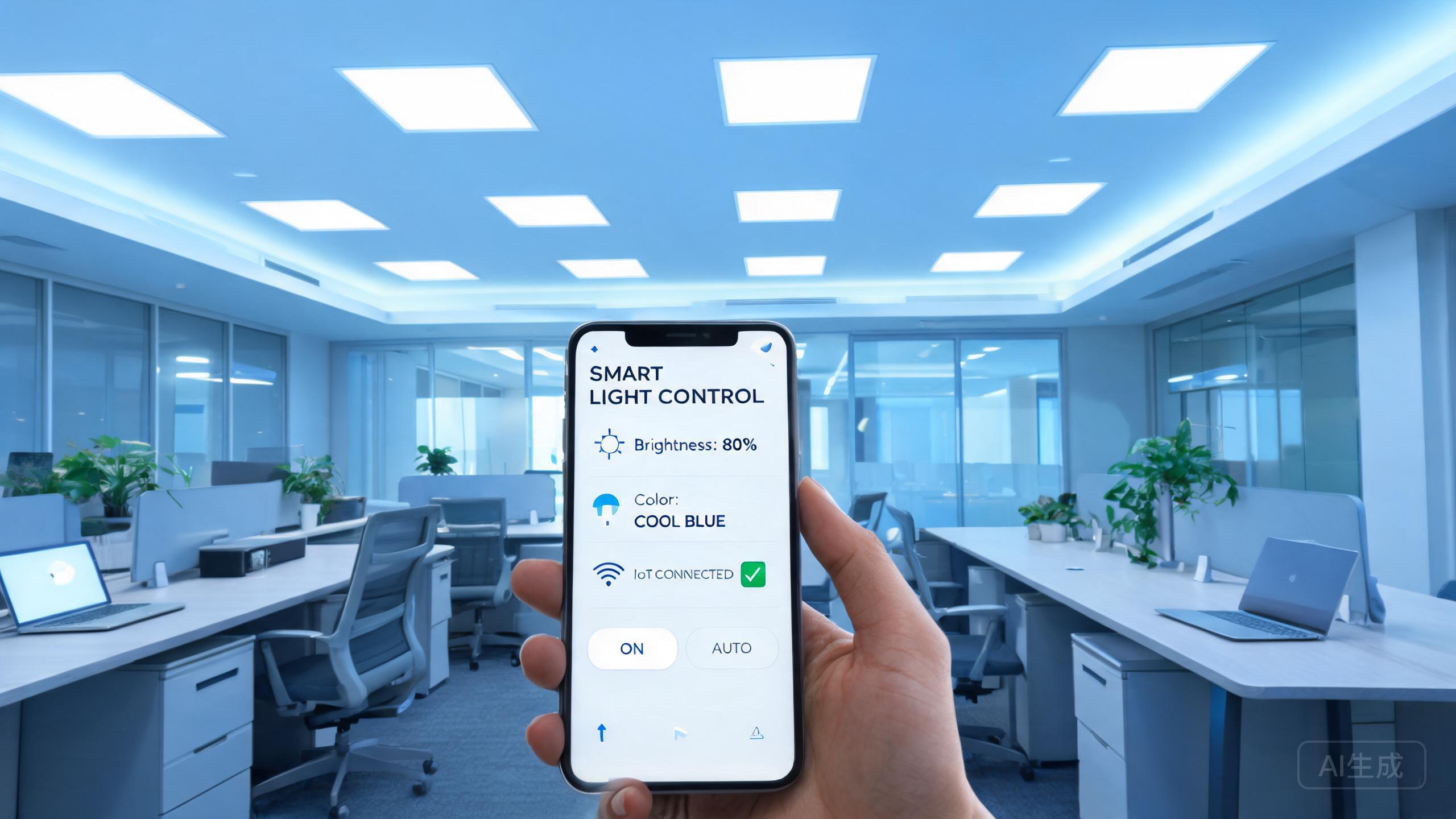
Lighting fixtures are becoming IoT nodes in smart buildings. Each fixture with a networked driver becomes a data point for:
- Energy monitoring: Real-time kW consumption per fixture, per zone, per floor
- Predictive maintenance: Driver temperature trends predict failure 2-4 weeks before occurrence
- Space utilization: Occupancy data from lighting sensors (PIR + daylight) feeds into workplace analytics
- Emergency response: Fixtures can flash in evacuation patterns during fire alarms
BMS Integration Protocols
| Protocol | Origin | Lighting Compatibility | GCC Adoption |
|---|---|---|---|
| BACnet/IP | ASHRAE | Via DALI gateway | High (most common) |
| KNX | European | Native, via DALI gateways | Medium (luxury projects) |
| Modbus TCP | Industrial | Via DALI gateway | Medium (industrial) |
| OPC UA | Industrial | Via middleware | Low |
| REST API | Web | Cloud-connected drivers | Growing |
For Saudi Vision 2030 megaprojects (NEOM, Red Sea, Qiddiya), BACnet/IP is the dominant BMS protocol. DALI-2 lighting fixtures connect via DALI-to-BACnet gateways, with each gateway supporting 64 DALI devices.
4. Daylight Harvesting
Daylight harvesting uses photosensors to measure natural light levels and automatically dim or switch off artificial lighting when sufficient daylight is available. In GCC buildings with large glazed facades, this can achieve 30-50% lighting energy savings.
Implementation Approach
- Photosensor placement: Mount at working plane height (0.8m), not ceiling — measures actual task light levels
- Dimming response: 0-10V or DALI dimming, with 2-3 second fade time to prevent visible flicker
- Zoning: Perimeter zone (0-3m from window) gets aggressive dimming; interior zone uses standard schedule
- Sensors: Combination PIR + daylight sensors reduce component count and wiring
Energy Savings Data
A 2025 study of 12 GCC office buildings with daylight harvesting showed:
| Building Type | Floor Area | Annual Savings | ROI Period |
|---|---|---|---|
| Office (curtain wall facade) | 15,000m² | 42% | 2.1 years |
| Office (punched window) | 8,000m² | 28% | 3.4 years |
| Retail mall (skylight) | 25,000m² | 51% | 1.8 years |
| Hospital (limited windows) | 20,000m² | 15% | 4.2 years |
5. Emergency Lighting Integration
GCC fire codes (Saudi SBC 801, UAE Fire and Life Safety Code) require emergency lighting in all commercial buildings. Smart lighting systems integrate emergency functions:
- DALI Emergency: DALI-2 includes emergency lighting commands (IEC 62386 Part 202). Emergency drivers can self-test battery capacity and report status.
- Self-test scheduling: Automatic monthly function tests and annual duration tests, logged digitally
- Fault reporting: Failed emergency fixtures reported to BMS in real-time, eliminating manual walk-through inspections
This integration eliminates the need for separate emergency lighting circuits, reducing wiring costs by 20-30% in new construction.
6. Solar-Integrated Smart Street Lighting
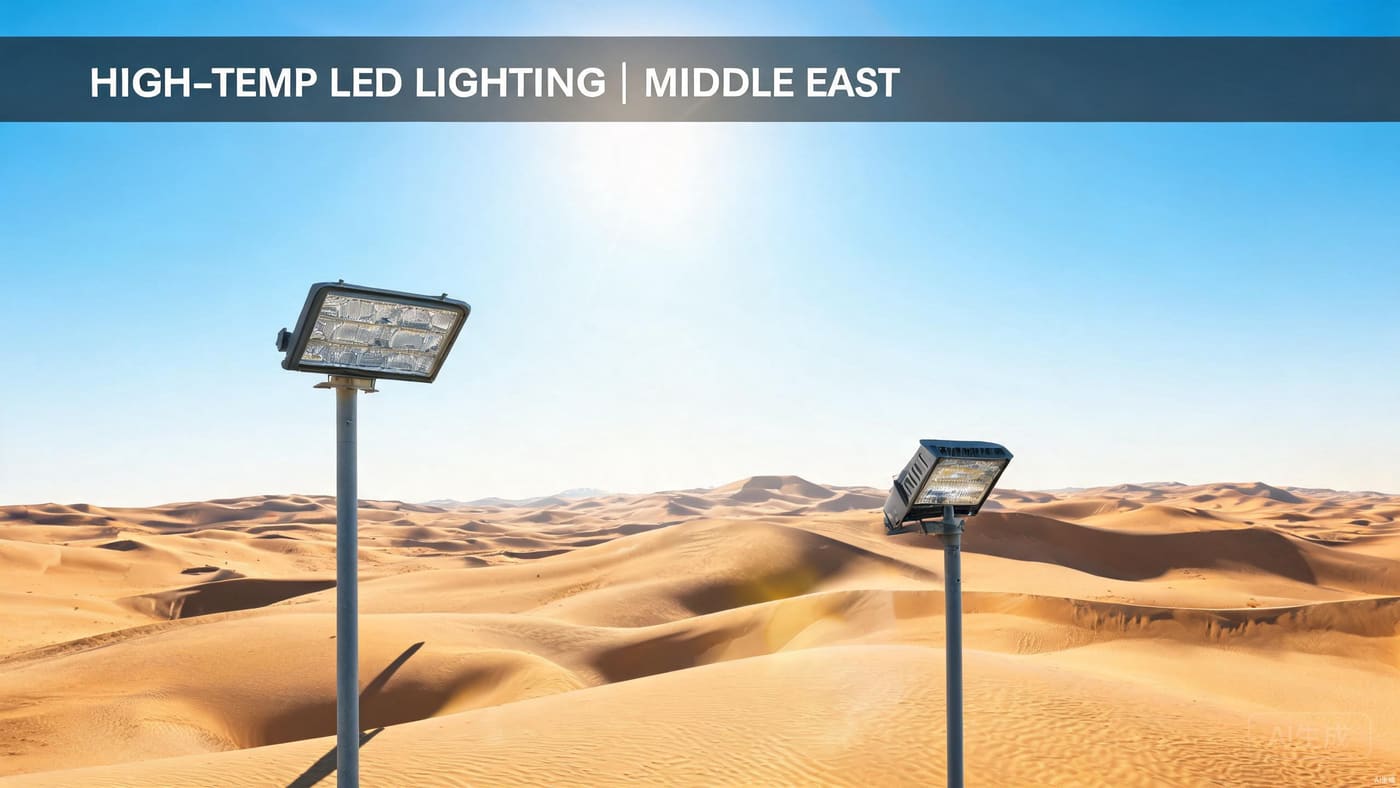
For outdoor GCC applications, solar-powered LED street lights with smart controllers are replacing grid-connected systems. Key features:
- LiFePO4 batteries: 3,000+ cycle life at 50°C ambient temperature
- MPPT solar charge controllers: 98% conversion efficiency
- Microwave motion sensors: Detect vehicles/pedestrians at 15-30m, dim to 20% when no motion
- Remote monitoring: 4G/NB-IoT connectivity for centralized management of street light networks
- Adaptive dimming schedules: Full brightness during peak hours (18:00-23:00), 30% brightness during low-traffic hours (23:00-06:00)
Yakeen Lighting’s solar street lights (60-300W, IP68) support motion-sensor dimming and optional 4G remote monitoring, with LiFePO4 batteries rated for 50°C+ ambient operation.
Practical Recommendations for GCC Projects
For Office Buildings ( Riyadh, Jeddah )
- Specify DALI-2 fixtures on perimeter zones for daylight harvesting
- Use 0-10V fixtures in interior zones (simpler, cost-effective)
- Integrate via BACnet gateway to building management system
- Add occupancy sensors in meeting rooms and less-used areas
- Target 35-40% energy savings vs. non-dimmed baseline
For Hotels ( Dubai, Abu Dhabi )
- Use Bluetooth Mesh for guest room lighting control
- Provide app-based control for VIP suites
- Specify tunable white (HCL) in spa and wellness areas
- Integrate with PMS (Property Management System) for automatic check-in/out scenes
- Target 25-30% energy savings with improved guest experience
For Retail (Malls, Boutiques)
- DALI track lights for accent and display flexibility
- Scene programming — different lighting for morning setup, peak hours, and closing
- Daylight harvesting near skylight and entrance areas
- High CRI (90+) for merchandise color accuracy
- Target 40-50% energy savings in skylit malls
Yakeen Lighting Smart Lighting Capabilities
Yakeen Lighting supports smart lighting integration across its product range:
- Dimming protocols: 0-10V, DALI, TRIAC, Push DIM, RF 2.4GHz
- Wireless control: Zigbee and Bluetooth Mesh compatible drivers available on request
- Tunable white: 2700K-6500K on panel lights, linear pendants, and downlights
- Daylight sensors: Photosensors with 0-10V or DALI output
- Occupancy sensors: PIR + microwave combination sensors
- Solar smart: Motion-sensor dimming + optional 4G monitoring on solar street lights
- DALI-2 compliance: Emergency lighting integration per IEC 62386-202
All smart lighting products carry SASO and G-Mark certification for GCC market compliance. Contact [email protected] or WhatsApp +86-181-0343-4722 for smart lighting project consultation.
Conclusion
Smart lighting adoption in GCC commercial buildings is accelerating, driven by energy regulations, sustainability mandates, and tenant experience expectations. For specifiers and contractors, the key decisions are: (1) DALI vs 0-10V based on control complexity needs, (2) wireless vs wired based on installation constraints, and (3) HCL adoption for premium office and hospitality projects. With proper specification, smart lighting delivers 30-50% energy savings with 1.5-4 year ROI in typical GCC commercial applications.